


I once opened my laptop to send an email and somehow ended up researching whether medieval monks had better attention spans than we do.
One wasted afternoon later, I set out to never say these phrases again:
- “Where did the day go?”
- “I'll get up early and finish tomorrow.”
- “I’ll get to that right after I…”
Yes, $40/month for 5 “coworking apps” that were just group Zooms, 7 music generators, countless Pomodoro timers, phone jail locks… Some were fun, but none stuck for more than a week.
Now THESE were great — the Newports, Clears, Allens had great helpful stuff to say about the philosophy of focus. But what I wanted was something more concrete and easier… I wanted one button to press when the work was hard and my attention was drifting.
On an airplane with broken WiFi I had my “I'm in the Zone” moment . I got so much done, distractions were uninteresting to me… I felt great when we landed. Kotler had written about this, but suddenly it was real…and it changed how I thought about work.
I get a day's worth of work done by noon.Now I lecture on how to find your Flow State.
I've given over 400 talks on Flow States and
you're welcome to watch some of them here.


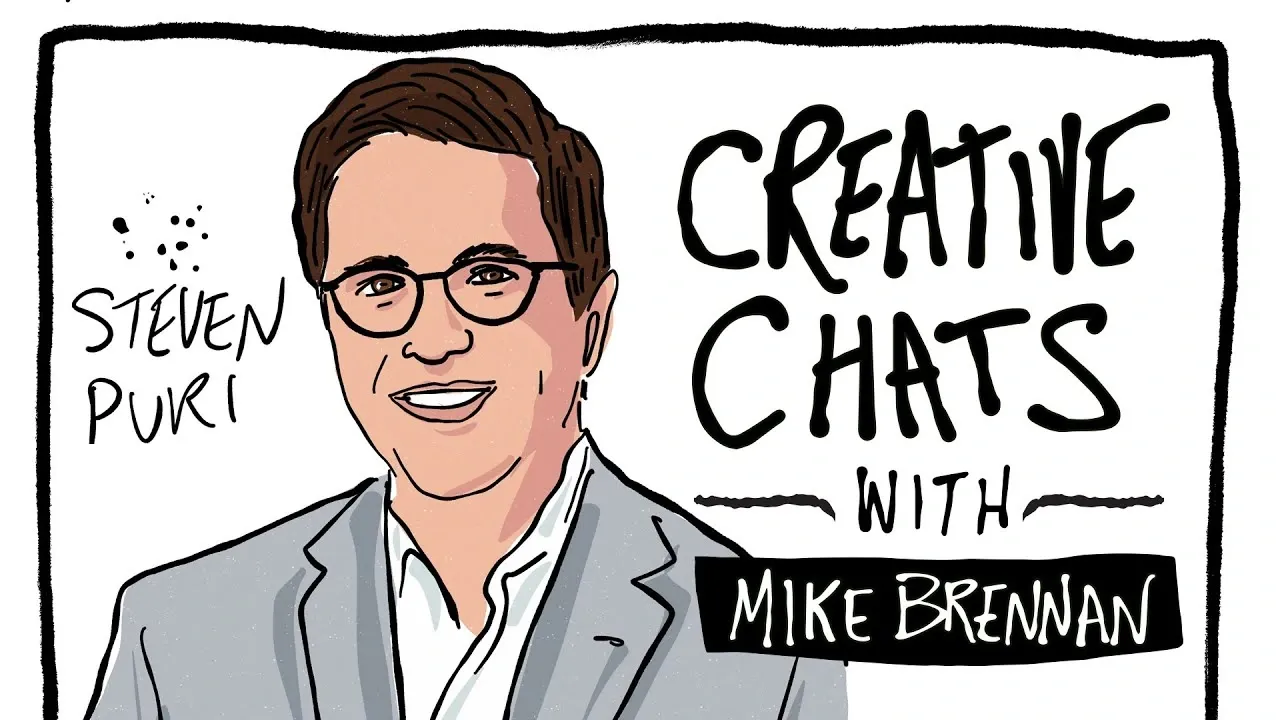







I know, I know — what's a Flow State?
Flow is a measurable, almost magical brain state. Your prefrontal cortex that makes you self-conscious quiets down…
norepinephrine sharpens attention…
in short, focus stops feeling like effort.
People in flow get dramatically more done — not by working harder, but by stopping the fight with their own attention. Why didn’t someone tell me about this in college? grrrrr.
(want to go DEEEEEEP? I wrote this blog post)
I experimented on myself. The 3 things that reliably get me into flow are:
Music to block out the world
A to-do list and a timer to stay on track

A friendly voice to keep me off my phone and social media
Based on this,
Tony & I designed
a simple website that
runs in the background
while we work:Click/tap the gold dots to learn more
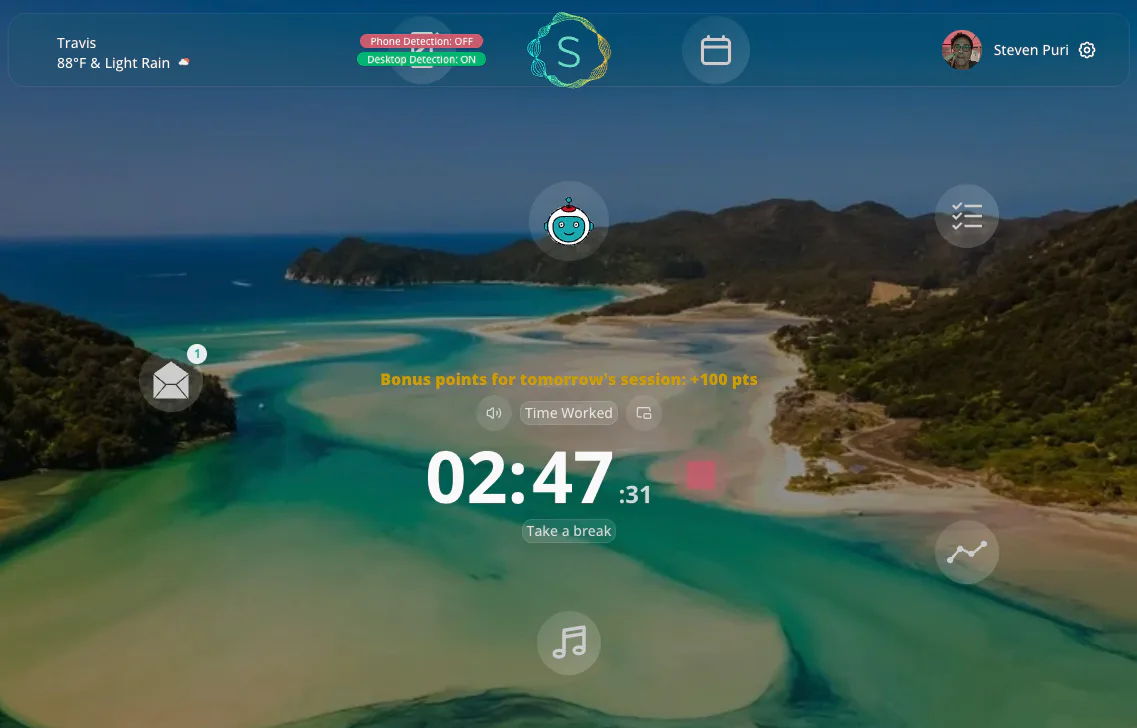
It works for us…and apparently a lot of others :)
“This is the only focus app I’ve ever been able to use successfully!”
Read on XIsabella M.Virtual Executive Assistant 
“All the best strategies and tactics in one coherent solution. Sukha’s the last productivity app you’ll ever need…”
Read on XNiklas G.founder/CEO of Four Minute Books 
“Sukha Allowed me to keep focused in the tasks and increased my concentration”
 5-star review, read the originalMario S.experience designer
“I get more solid work done now from 9 to 12 than I used to all day.”
Read on XElle C.Advertising copywriter 
“I'm also really loving the new assistant that helps break things into smaller pieces, for when my ADHD decides that a task is too big to tackle.”
5-star review, read the originalArianna B.ADHD Coach & author
“I didn’t want to believe the hype at first, but Sukha’s been amazing.”
Read on XTimon V.Software engineer 
“The amount of focus I’ve experienced is like compressing 5 years into 400 days.”
Read on XEmiliano P.Growth engineer 
“I no longer need multiple apps and can just use the one.”
 5-star review, read the originalLaura M.digital banking exec
“Having an AI assistant to organize my tasks is a game-changer.”
Read on XEnrique T.Senior product manager 
“Working from home can leave me distracted, I was able to create and stay in a work flow.”
5-star review, read the originalJoel H.blogger & yoga instructor
“It helped me focus and stay on task while I was writing and editing my book.”
5-star review, read the originalBrent L.author & yoga instructor
“A game changer! I got more done in the last 3 hours than I did all of yesterday.”
Read on XLenny R.#1 Substack for Business 
“My afternoons have become so much more productive.”
5-star review, read the originalTia M.Film/TV producer
“If you’re working alone from home, like me, Sukha provides a sense of community and motivation, which is invaluable…”
Read on XMarieke K.Professional copyeditor 
“I finally have my evenings back thanks to the productivity gains.”
5-star review, read the originalBrian L.blogger
“I cannot believe how focused I get. Sukha changed how I did everything.”
Read on XTina L.Novelist 
“The days I use Sukha end with a feeling of satisfaction.”
Read on XNikolaos B.Web developer & Growth analyst 
“I reach for my phone less and remain on-task far longer.”
5-star review, read the originalElizabeth B.Author & enterprise productivity consultant
“It’s been a game changer to knock out so much more deep work. Sukha’s become my most-used app.”
Read on XJaryd H.founder of How They Grow 
“I wrote my book, The Smallest Passport, instead of thinking about writing it.”
5-star review, read the originalJohnDavid W.novelist
“Always struggling to focus, until Sukha made it simple.”
Read on XDavid M.Full stack developer 
“Sukha is a haven of calm productivity.”
 Read on MediumZohvib M.Medium blogger
“I finished writing my book.”
5-star review, read the originalJohn L.sales coach
“Sukha’s perfect combo of wellness, music, and community keeps my creativity flowing… and my distractions at bay.”
Read on XBritney W.Art Director 
“I tend to scroll a lot and Sukha has saved me from myself more than once.”
5-star review, read the originalRafi R.TV development exec
“This app really gets every feature you need to focus / get in the flow in one place… and it does it very well.”
Read on XWagner R.UI/UX designer 
“It solves my tendency to procrastinate or check social media when I get bored.”
5-star review, read the originalMarieke K.Professional copyeditor“So many distractions these days make staying on task nearly impossible.”
5-star review, read the originalTia M.Film/TV producer“Sukha has really saved me from my distractions. And I can't even use my phone since that's locked down too. Instead of firing up Reddit I actually get my work done!”
5-star review, read the originalRafi R.TV development exec“If I try to fly solo while writing, I’m fighting distraction the whole time. If I fire up The Sukha, I work.”
Read on XMelissa W.Novelist 
“This app makes me happy to work. You only need one app to change your world around.”
Read on MediumEric B.Medium blogger
“This thing is amazing.”
Read on XKent D.Software engineer 
“Sukha gives me honest data about my time — not aspirational, not idealized, just real numbers. With that, it becomes obvious what needs to change.”
Read on XAhmet U.Entrepreneur, Software Engineer 
“This app and community have changed my entire mindset towards getting through tasks and increased my productivity and efficiency, while freeing up some much needed personal time.”
5-star review, read the originalMatt R.Film/TV writer/director
“Over the years I’ve tried just about every time management solution out there, & even created my own systems. Nothing has kept me engaged and using the system like Sukha, and the difference is its point system.”
Read on XChristopher di A.Author, Mentor, Engineer 
“Between my job and taking care of my family, writing a book felt almost impossible. I was so frustrated with not being able to get into my writing flow when I was able to squeeze in time to work on it.”
5-star review, read the originalAlly R.novelist
“Sukha does everything in one place, unlike other apps that just do one thing.”
5-star review, read the originalJohn L.sales coach“Sukha is the task manager I didn’t know I needed! …and tribe, and soundtrack, and motivation….”
Read on XLacey A.Brand Designer & Strategist 
“The best focus, work management, getting-into-the-flow app I have ever tried - and I’ve tried many!”
Read on XMaurice D.Software engineer 
“Sukha has been a godsend for podcasting, writing, and all the critical but easy-to-put-to-later things which move the needle on a meaningful life…”
Read on XNathan M.Songsmith, poet & podcast host 
“It trained my brain to switch on its work mode as soon as I start a session.”
5-star review, read the originalMarieke K.Professional copyeditor“When I’m creatively blocked, I open Sukha and find my flow again.”
Read on XAmanda P.Web designer 
“Life-changing for me.”
Read on XMarcel F.Software engineer 
“Instead of juggling a timer, music, task list, and distraction blockers, everything I need to focus is in one place.”
5-star review, read the originalOlivia F.charisma coach
“stay focused without medication and do my best work in less time”
5-star review, read the originalLaura M.digital banking exec“I finish faster and make more progress than I expect.”
5-star review, read the originalArianna B.ADHD Coach & author“I was struggling with brain fog, but fixed my productivity with Sukha.”
Read on XEleanor A.Editor 
“the timer is a nice touch that reminds you to take periodic breaks so that you don't burn out or develop back pain”
5-star review, read the originalBrent L.author & yoga instructor“Freeing up some much needed personal time.”
5-star review, read the originalMatt R.Film/TV writer/director“The flow music helps get me through the endless emails & spreadsheets.”
Read on XSatya P.CPA 
“I use The Sukha Company to stay focused and avoid outside distractions, effectively solving my procrastination issues.”
5-star review, read the originalBill H.podcast host
“improved focus -- which then let me get to catch up on other tasks that I had been putting off”
5-star review, read the originalJon C.hardware engineer
“It’s like a dream come true.”
Read on XMarshall K.Sustainability consultant 
“My morning Sukha session is the highlight of my day.”
Read on MediumBeth M.Medium blogger
Here’s what we stuck in it
| Feature | Sukha | Website blockers | Music apps | Timer apps | Coworking apps | Phone‑lock games |
|---|---|---|---|---|---|---|
| A calm place to work(we block distracting sites & apps) | a | |||||
| Music to hold our attention(lofi, binaural + 6 more sound worlds) | b | c | ||||
| Our next step stays in view(one-click task management) | b | d | ||||
| A rhythm to work to(a Pomodoro timer + healthy breaks) | e | f | ||||
| Help getting unstuck(AI coach to break down tasks) | ||||||
| Everything in one place(a full flow state app) |
Footnotes
aDeters phone use through gamification rather than actively blocking sites and apps.
bSome timer apps bundle this; most do not.
cPlayed by the session host during some sessions, rather than always on and under your control.
dShows your stated goal during a session; not a full task manager.
eSome blockers can schedule a session, but do not run a work-and-break cadence.
fSessions are time-boxed, but on the host's schedule rather than whenever you need one.
My favorite thing any Sukha member
has ever said to me:
“I have two kinds of days now:
3pm I'm playing with my kids,
or
6pm I'm still at my desk wondering where the day went.
The difference is: did I open Sukha that morning.
So I pay for Sukha because my kids are not going to be 2 and 4 forever.”
Would you like a free trial?
- Get a task in mind
- Start your 3-day free trial
- Click the big play button

- Sukha runs in the background while you work...
Runs on Mac, Windows and Chromebook, in any Chromium browser (Chrome, Edge, Arc, Brave). Blocks websites and apps on your computer and your phone.
Love it? Membership is $20/mo or Lifetime for $400. (I'd start with the cheap one)
Frequently asked questions
Here's your answer:
- Sukha is a complete flow state app, giving you all the tools to drop into flow, whereas most traditional tools are single-feature focus apps.
- Single-feature apps (like standalone Pomodoro timers or website blockers) require you to manually build your own focus environment piece-by-piece.
- Flow state apps likes Sukha automatically integrate neuroscience-backed music, task management, distraction blocking, and AI coaching into one seamless system to trigger your flow state.
So: yes, you can assemble your own massive DIY set of tools and use a bunch of old-fashioned, one-feature apps to create a productivity system — that's what I tried. It became too much of a hassle to open and click 5 damn apps every time I wanted to work and I just stopped doing it.
Call me lazy (note to readers: I'm lazy. There. I said it.) but I just wanted one modern tool with a single “Play” button that had EVERYTHING I needed to get into my Flow State.
Is my goal to work all day? Heck no.
My goal is to frictionlessly drop “into the zone” so I can power through my stuff, feel great and play with my little son as much as possible before he grows up, asks me for the car keys and reminds me that I need to donate to his “Moon Colony Eco-Tourism Graduation Trip” fund (whatever happened to school bake sales?).
There are two ways to focus:
- Cobble together a bunch of old-school single-feature apps.
- Use a fully-featured, modern flow state app like Sukha.
- Are YOU worth it?
- Do YOU value your time and brain energy?
- Or do you wanna wake up 60 years old, still working and opening and clicking a bunch of apps every time you start work?
Wanna procrastinate more before making the right decision?
Here ya go:Sukha vs Coworking Apps
Sukha vs Focus Game Apps
Sukha vs Focus Music Apps
Sukha vs Pomodoro Timer Apps
When you decide to try Sukha, I'll be the voice you hear to onboard you and make the transition easy.
In short — Sukha is built for knowledge workers who need to sit down and do deep thinking. Our members just want to do their deep thinking more quickly and feel more energized afterwards.
If your day is spent on the phone or on Zoom or in meetings (think marketers, biz dev, salespeople, et al.), then Sukha is not for you. And boy does my heart weep for you..
Wanna read about specific use cases?Sukha for Writers
Sukha for Developers
Sukha for Designers
Sukha for ADHD
Nah. I hate apps that bombard you with ads and emails to buy their upsells and add-ons.
With Sukha, you get to try EVERYTHING for 3 days free. If you continue as a member, you get EVERY FEATURE.
No emails, no in-app banners, nothing.
Just you, focusing.
I doubt you will because 94% of our members renew month after month. For a reason.
Yes. Lots of stuff.
I'm kidding.
The world we live in is crazy distracting. You'd have to be blind and deaf not to be distracted by all the lights and sounds coming from your phone and laptop.
Sukha's here to help with that. Not by making you blind and deaf. By silencing all that noise for a golden hour or two every day.
No. I'm not a doctor. If you think you've got something going on, go get checked. I did — I was medically diagnosed with ADHD as an adult.
Didn't actually change much other than give me an 'ohhhhhhh THAT explains a lot' moment which was really funny for my wife to witness.
Boy do I feel you on this one.
I checked 41 focus websites out recently and all of them look like their marketing teams went into ChatGPT over lunch and typed: “My corporate overlord told me to make a new website...ideally use some bold, sans-serif font to make all the same promises as everyone else — ‘save time’ ‘focus better’ ‘get more done’ ‘etc.’ Oh — and if my boss likes it, ship it and tell her I did it.”
If Tony & I hadn't created Sukha, I don't know how I'd choose.
We really wanted Sukha to stand apart — to create a new category of complete flow state apps. I know we'll get copied, but for now we're a category of 1.
With Sukha, we wanted a one-button-get-us-into-a-Flow-State, not a “open a music app, turn on desktop focus mode, silence our phone, open my task manager app and a timer app, etc.” every time we wanted to get in the Zone. (Remember: we're lazy)
Is the document in a language you understand? That's always a good place to start.
Ok, but seriously — that loop usually comes from a task that feels too big or too undefined for your brain to grab onto, so you retreat to something smaller and finishable (my word).
The escape to your phone is the symptom of a target your mind couldn't lock onto.
Shrinking the work to one clear, achievable next step is what stops the loop, which is one of the conditions Sukha is built around. Wanna break a big task down or make it more clearly defined? Ask your AI assistant. My peabrain likes having one simple thing to get done at a time.
It won't happen in a day, and anyone promising an instant rewire is selling something — but the direction is absolutely changeable.
A lot of our members do, and so do I (diagnosed as an adult - I wrote about this above, in case you were paying attention, which is hard when you have ADHD, which is Attention DefiHeyWhatAreYouEating Disorder).
Real disclaimer first, because you deserve better than marketing copy on this one: Sukha is not a medical tool and it doesn't treat anything. I'm a guy who makes software, not a doctor. Go see an actual professional.
What I can tell you is that the stuff that makes focus hardest for my brain is the exact stuff we built Sukha to take off my plate:
- Task paralysis. When the thing is too big or too vague to start, the AI coach breaks it into one specific next step, so you're not staring at “WRITE Q3 STRATEGY” like it's a threat.
- Executive function overhead. Pick the task, close the tabs, find the music, set the timer. That's four decisions before you've done a single minute of actual work. Sukha is one click.
- The distraction that shows up at minute twelve. Blocked on your computer and your phone before it ever reaches you, with lofi and binaural focus music running so your attention has something steady to hold onto.
And the accountability is gentle on purpose. Streaks and points, not a drill sergeant. Nobody has ever been shamed into focusing, and I say that as someone who has tried to shame himself into focusing roughly nine thous-hey, what are you eating?
Dying to procrastinate read more? Sukha for ADHD
Let's be clear: Cal Newport is a god.
The concept label “Deep Work” is his, not ours. Cal Newport made the case for it in his book, and time-blocking, protected hours and guarding your cognitive bandwidth all come out of that argument rather than out of our marketing.
I've only spoken to Cal once and to be clear - I'm 99% sure he doesn't remember me. While I'd love to be presenting ‘Cal Newport’s Sukha,’ the reality is that he didn't advise us directly on building this. He just wrote a ton of stuff that we think is spot-on and helpful.
What we built is what that argument looks like as one button: instead of reading about protecting a block of time and then assembling the protection yourself out of four apps, you click once and the block is protected.
Read this blog post about how flow states are a real neurological state where you do your best work, faster and feel good, not burned out. This post lays it all out:“The Magic & Science of Flow States”
A lot of other apps have descriptive names that relate to their features: we “brick” your phone, we block websites “cold turkey,” etc.
Sure, we could have called this “flow state app #9”...but really, Sukha is named after what we want for you - it means “happiness” in Sanskrit. It's not about a feature, it's about a feeling.
The happiness you feel from doing your work with ease and being back in control of your day. It feels amazing.
Sukha is free to try for three days, no commitment required, so you can test it on your actual work before deciding.
Getting started takes less than 10 seconds: click any gold “Start” button, sign up with your email, and you get the full Pro version for 3 days with unlimited sessions.
You love it? $20/month or $400/lifetime. You're a student or poor? Just email me and I'll cut you a discount. Tony & I are in this to help you live a better life, not get rich.
And if Sukha doesn't help you? Cancel and all your data are deleted. (yes, “data” is a plural noun. There's that copy editor instinct again. Same need to show off my grammar skills that annoys my wife over dinner. Go me.)
Absolutely you can put off this decision. You are a grown adult and I am not your mother (I checked Ancestry.com).
You’re probably reading a focus app website because you AREN’T thinking that you could use a great focus app. No matter, your three days free are here for you.
And as the famous saying goes (famous because I just said it): the price is $20 a month, but the cost of not deciding is wasting a little of your life every single day starting now.
Bookmark us. We’ll leave the lights on for you.
It helps to build a habit: the more you practice dropping into a flow state, the more easily you can access it, so start each workday by pressing Play before you begin.
Research shows it takes about 20 minutes to drop in, so try Sukha when you have a real task that'll take 30–60 minutes.
Then look up when you're done and notice how much you got through — and how you feel.
Yes.
Sukha runs on Mac, Windows and Chromebook, in any Chromium browser - Chrome, Edge, Arc, Brave and the rest of them. You don't need to download anything, and there's no desktop app to keep updated.
Blocking covers websites and apps, on your computer and on your phone, so the quiet you set up at your desk doesn't evaporate the second you pick up your phone.
There is also a free Chrome extension, which works in any of those browsers, if you want the distraction blocking to reach further across your browser.
On integrations: you can pull your to-dos straight in from Todoist, Linear and Google Tasks, so you are not retyping a task list you already keep somewhere else. And when a session starts, Sukha updates your Slack status to "In a Sukha session" and mutes incoming notifications, so the people who would have interrupted you can see not to. It also sits happily alongside Google Calendar.
Starting all of that is one click. Not a setup wizard, not a config file. One button.
Hells yes.
If you scrolled down this far, you're not looking for a focus app - you're procrastinating. You should be watching a comedy channel on YouTube. Or checking out our new webtoon: “Confessions of a Distracted Founder.”
Tony & I have both done laundry to avoid sending an email…we have minds that wander but still want to win.
We built Sukha because we wanted to feel unstoppable.
And we believe you can feel this way, too.
C'mon in. The water's warm.